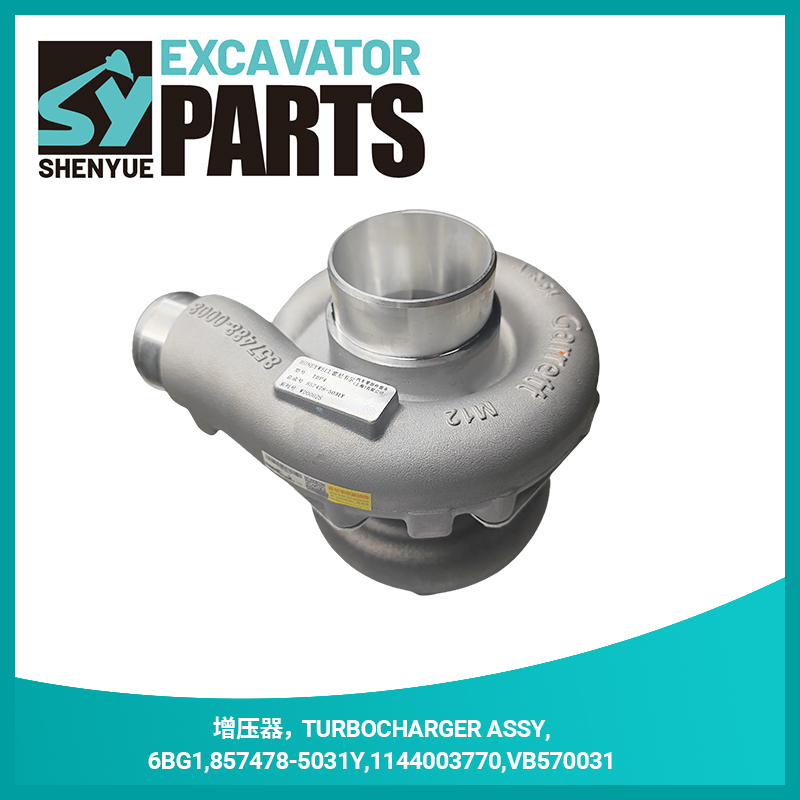
A turbocharger is identified from four sources, not one. The OEM part number on a label identifies what the machine builder ordered. The cartridge number, stamped or etched on the center housing rotating assembly, identifies what is actually inside. The housing marks identify the compressor and turbine housings and their sizes. The serial number identifies the individual unit. Quote all four when asking for a replacement, because supersessions, running changes and the same base unit built to several specifications all live in the gaps between them. Where the nameplate is missing or unreadable, the machine model, the engine model and the engine serial number still allow the correct unit to be confirmed from the engine record.
What you will notice
| Symptom | What it usually points to |
|---|---|
| A replacement turbocharger arrives and does not fit | Identification was made from the machine model alone. One machine model is commonly built with more than one engine variant, and each variant can use a different unit. |
| The new unit fits but the machine performs differently | A different trim, a different actuator setting or a different housing size. These differences are real, and they can only be quoted correctly when the numbers behind them are known. |
| The nameplate is missing or polished blank | Damage or a previous rebuild. Identification then moves to the cartridge number, the housing marks and the engine record, which together are normally enough. |
| The part number on the old unit matches no catalog listing | A supersession, or a number that has been replaced. Superseded numbers are not obsolete numbers, and the interchange has to be confirmed rather than guessed. |
| Two suppliers quote two different numbers for the same machine | One may be quoting the OEM number and the other a cartridge or an aftermarket equivalent. Both can describe different things, which is why the grade belongs on the quotation. |
Most likely causes
| Cause | How to confirm it |
|---|---|
| Quoting the machine model only | The machine model narrows the field but does not identify the turbocharger. Engine variant, emissions specification and build period all change the unit fitted, so the engine model and serial number belong in every inquiry. |
| Confusing the assembly number with the cartridge number | A cartridge replaces the rotating assembly inside the existing housings. It carries its own number and is valid only when the housings are serviceable, so the two numbers are not interchangeable. |
| Assuming an aftermarket equivalent is dimensionally identical | Housing sizes, trim and actuator settings vary between equivalents. One that differs in trim will fit and run, and will not deliver the specified boost. |
| Ignoring the actuator | The wastegate or electronic actuator carries its own number and its own setting. Fitting the wrong actuator turns a correct turbocharger into a boost fault. |
| Reading a casting number as a part number | Casting numbers identify the mold, not the assembly. A housing casting number is useful evidence and is not a number that can be ordered. |
Numbers and marks, and what each one identifies
| Number or mark | What it identifies |
|---|---|
| OEM part number on the label | What the machine or engine builder specified for that build. The starting point for any inquiry. |
| Cartridge or rotating assembly number | What is actually inside the housings. The number to quote for a rebuild or a cartridge replacement. |
| Compressor and turbine housing marks | Housing identification and size, confirming the variant when the nameplate is unreadable. |
| Actuator number and setting | The boost control element. A different actuator number means a different boost curve with the same turbocharger. |
| Serial number | The individual unit, which matters for warranty, build-date changes and tracing supersessions. |
| Engine model and serial number | The fallback route when no turbocharger number survives, resolving the build variant from the engine record. |
How to confirm it
- Photograph every marking before the unit is cleaned
Take clear photographs of the label or nameplate, the center housing, both housings and the actuator before the unit is washed or the numbers are polished away. Identification work done from photographs is repeatable; work done from memory and a phone call is not.
- Record the OEM part number exactly as printed
Write down the number including any suffix, revision letter or spacing, and note where it appears. A single altered character places the inquiry on a different unit, and suffixes frequently carry the supersession history.
- Read the cartridge number from the center housing
The cartridge number tells you what is inside the unit you actually have, which is not always what the label says after a rebuild. It is the number needed when a cartridge rather than a complete assembly is being considered.
- Note the housing marks and the actuator number
Record the compressor and turbine housing marks, and the actuator number with its setting. These confirm the variant and prevent a boost fault that is mistaken for a performance fault after fitting.
- Confirm the engine model, engine serial number and machine serial number
These three items let the correct unit be confirmed from the engine record when the label is missing, and they let a superseded number be resolved to the current one rather than guessed at.
- State the grade wanted, how the unit failed, and send everything in one message
Say whether the requirement is genuine, OEM-quality new, remanufactured exchange or a cartridge for a rebuild, and say how the original failed, because a unit lost to a blocked oil drain is a supply problem as well as a parts order. Guangzhou Shenyue Machinery Technology Co., Ltd. confirms by machine model, engine model and serial number, and states on each line whether the part is genuine, OEM-quality or aftermarket.
What to do about it
Nameplate readable: quote the OEM number, the cartridge number, the actuator number and the engine serial number together. Any supersession is then resolved against the engine record rather than assumed.
Nameplate missing: quote the cartridge number and the housing marks if they survive, plus the engine model and serial number. Together these are normally enough to confirm the correct unit.
Cartridge replacement considered: confirm the housings are undamaged and within tolerance before ordering. A cartridge fitted into a scored or warped housing will not hold its clearances.
Complete assembly replacement: order the installation kit with it. Gaskets, studs and the oil feed line are consumables, and reusing them is the most common cause of a leak or a repeat failure. Guangzhou Shenyue Machinery Technology Co., Ltd. supplies turbocharger installation kits and oil feed lines from Guangzhou for exactly this reason.
Grade decision: a genuine unit matches the original build, an OEM-quality new unit is built to the same drawings by a reputable manufacturer, and a remanufactured exchange unit is rebuilt with new wear parts against a core return. Each answers a different question, and the quotation should say which one it describes. Guangzhou Shenyue Machinery Technology Co., Ltd. holds 3,000+ part types on the shelf and 100,000+ part numbers available to order, quoting turbochargers, cartridges, actuators and installation kits to engine serial number.
Parts you may need, by grade
| Part | Grades commonly quoted |
|---|---|
| Turbocharger assembly | Genuine; OEM-quality new; remanufactured exchange with core return. Quote by engine model and serial number. |
| Cartridge (rotating assembly) | Genuine; OEM-quality. Valid only where the housings are serviceable. |
| Wastegate or electronic actuator | Genuine; OEM-quality. Confirm the number and setting; boost control depends on them. |
| Compressor and turbine housings | Genuine; OEM-quality. Confirm the variant from the housing marks. |
| Installation gasket and stud kit | Genuine; OEM-quality. Replace with every unit, without exception. |
| Oil feed and drain lines | Genuine; OEM-quality. Replace the feed line with any turbocharger replacement. |
Need the parts this covers?
Send the machine model, serial number and the part numbers you need. We confirm fitment before payment and state the grade of every line — genuine, OEM-quality or aftermarket.
Request a quoteFrequently asked
Which number should I send, the OEM number or the cartridge number?
Send both, plus the engine model and serial number. The OEM number identifies what the machine builder specified and the cartridge number identifies what is inside the unit you have; they answer different questions, and either can be the one that resolves a supersession. An inquiry that carries all of them is normally confirmed without a single follow-up question.
My turbocharger has no nameplate at all. Can it still be identified?
In most cases, yes. The cartridge number on the center housing and the housing marks usually survive, and together with the engine model and serial number and the machine serial number they are enough to confirm the correct unit from the engine record. Photographs of the unit and of the engine data plate make that confirmation reliable rather than approximate.
Why does the same machine model list more than one turbocharger?
Because the machine builder used more than one engine variant and emissions specification over the production run, and each variant can use a different turbocharger with a different trim or actuator setting. That is exactly why a quotation made from the machine model alone is unreliable, and why the engine serial number belongs in every inquiry.